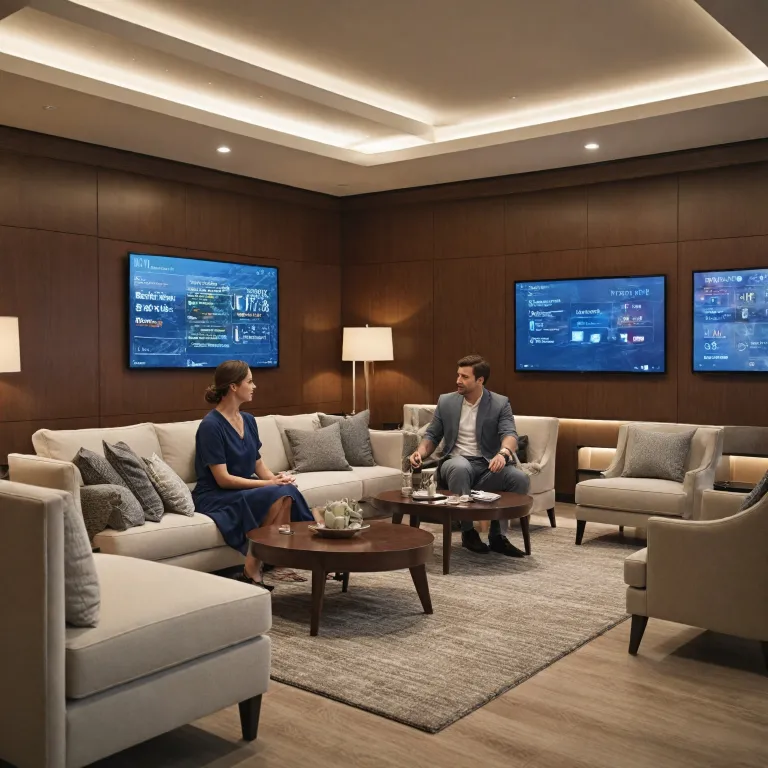
From cost center to profit engine in hospitality video distribution
A modern hospitality video distribution system is no longer a technical afterthought. It has become a strategic layer where hotel revenue management, commercial teams, and IT align to influence both RevPAR and guest satisfaction. When hospitality systems for video are treated as commercial assets, they support upsell paths, brand storytelling, and measurable ancillary revenue.
For many hotels, legacy television systems still operate as isolated islands. These systems deliver basic video channels to each room, but they rarely integrate with pricing, CRM, or content management platforms. By contrast, new hospitality solutions connect the distribution system with PMS and revenue tools, enabling targeted offers and dynamic merchandising in every hotel room.
Commercial leaders should therefore evaluate each entertainment system as part of the broader business model. The goal is to align room entertainment with the guest journey, from pre stay inspiration to on property engagement. This shift turns entertainment options into a curated portfolio of services that can be priced, packaged, and forecasted like any other revenue stream.
In this context, the hospitality video distribution system becomes a lever for segmentation. Guests in premium rooms can receive personalized content, enhanced streaming services, and exclusive live events. Standard rooms can still access a wide range of channels and demand movies, but with a different level of interactive features and bundled services.
Such differentiation requires robust management capabilities and scalable distribution systems. Providers like Amadeus Video Solutions, ZeeVee, StreamVision, earthTV, Pro Video Instruments, and Sencore illustrate how technology, content, and hospitality services now intersect. For revenue managers, the challenge is to translate these capabilities into clear KPIs, pricing rules, and measurable uplift in guest experience.
Aligning video distribution with revenue management and pricing strategy
To unlock value, a hospitality video distribution system must be embedded in the revenue management framework. This means treating entertainment systems as inventory, with clear attributes, costs, and demand patterns. When hospitality systems integrate with PMS and real time dashboards, commercial teams can monitor usage, conversion, and guest experience metrics by segment.
IPTV based video distribution and AV over IP solutions allow granular control of content. Hotels can adjust entertainment options by length of stay, corporate contract, or loyalty tier, and they can test different bundles of streaming services, live channels, and demand movies. An IPTV system delivers television and video content over IP networks, allowing hotels to offer a wide range of in-room entertainment options with centralized management.
Pricing leaders should also consider how content management rules interact with channel mix and distribution costs. For example, a hotel may offer premium room entertainment as part of a higher BAR, while charging à la carte for specific services in lower categories. This approach requires a robust content management layer that synchronizes offers across screens, digital signage, and mobile devices.
When PMS and video systems are connected to real time occupancy and revenue dashboards, forecasting becomes more precise. Commercial teams can analyze correlations between entertainment uptake, ancillary spend, and length of stay, using insights similar to those described for data driven hotel performance management. Over time, this supports dynamic packaging of hospitality solutions that reflect true guest willingness to pay.
AV over IP and RF based distribution systems also influence cost structures and scalability. Hotels that reuse coaxial infrastructure through HDMI to Coax RF Modulators can deploy new services without disruptive works. This technical flexibility allows revenue managers to pilot new entertainment services, adjust pricing, and refine the guest experience without committing to irreversible capital expenditure.
Designing guest centric entertainment journeys across rooms and public spaces
A hospitality video distribution system should orchestrate a coherent guest journey from lobby to hotel room. In public areas, digital signage and television systems can highlight local attractions, F&B offers, and loyalty benefits. In rooms, the same hospitality systems can shift focus to room entertainment, personalized content, and seamless access to streaming services.
Guest expectations now extend far beyond linear video channels. Travelers want a wide range of entertainment options, from live sports to demand movies, and they expect frictionless access to their own streaming services. AV over IP solutions provide scalable and flexible video distribution, enabling hotels to deliver high-quality content with low latency without extensive infrastructure changes.
For commercial teams, this environment opens new merchandising opportunities. A hospitality video distribution system can promote spa services, late check out, or F&B packages through interactive features on the television systems. When guests interact with these offers, the system captures data that can be fed back into content management rules and pricing strategies.
Digital signage in corridors, lifts, and meeting areas can be synchronized with in room content. This ensures that messages about local attractions, events, or business services remain consistent across all touchpoints. Hotels can segment content by floor, room type, or group profile, using hospitality solutions that treat each screen as a targeted media asset.
Such orchestration requires robust management interfaces and clear governance between IT, marketing, and revenue management. Sencore’s centralized management for IPTV delivery, or StreamVision’s web based control of in room entertainment services, illustrate how hotels can manage complex distribution systems at scale. When aligned with commercial objectives, these tools transform the guest experience into a structured, measurable, and revenue oriented journey.
Leveraging infrastructure and technology choices for scalable performance
Infrastructure strategy is central to the performance of any hospitality video distribution system. Many hotels still rely on coaxial cabling, which can be modernized through RF based distribution systems and HDMI to Coax RF Modulators. Technologies like those from Pro Video Instruments allow hotels to scale video services and deliver HD content to every room without replacing existing wiring.
At the same time, IPTV and AV over IP architectures are gaining ground in new builds and major refurbishments. These systems route video, television, and content over IP networks, enabling flexible zoning, centralized content management, and integration with other hospitality systems. AV over IP devices such as 4K networked encoders and decoders support high quality room entertainment and live event distribution across the property.
For revenue managers and commercial directors, the key is to understand how each technical choice affects business agility. IP based distribution systems make it easier to introduce new entertainment options, adjust bandwidth for streaming services, or deploy interactive features without room by room interventions. RF based solutions, by contrast, may offer lower upfront costs and faster deployment, particularly in large existing hotels.
Hybrid architectures are increasingly common, combining RF for broadcast channels with IP for personalized content and on demand services. This approach allows hotels to maintain a wide range of free to air channels while monetizing premium entertainment systems and targeted services. It also supports the integration of outdoor cameras and livestream marketing, as seen with earthTV, which can feed live views into both room entertainment and public area screens.
Ultimately, infrastructure decisions should be evaluated through a commercial lens. The ability to scale video, adjust content portfolios, and support future hospitality solutions will directly influence ROI. Hotels that align technical roadmaps with revenue strategies will be better positioned to convert guest experience enhancements into sustainable business performance.
Personalization, data, and the monetization of content in hotels
Personalization is where a hospitality video distribution system intersects most directly with revenue management science. By linking content management platforms with PMS, CRM, and loyalty data, hotels can present personalized content and offers on in room television systems. This can range from tailored entertainment options to targeted promotions for F&B, spa, or local attractions.
When guests check in, the system can adapt room entertainment profiles based on language, stay purpose, or previous behavior. Business travelers might see information about meeting services and airport transfers, while leisure guests receive curated guides and live recommendations. Hotels can also highlight streaming services or demand movies that align with past viewing patterns, increasing both satisfaction and ancillary revenue.
Data from interactive features, such as on screen surveys or service requests, feeds back into commercial analytics. Revenue managers can analyze which entertainment systems drive the highest engagement, which bundles convert best, and how video distribution usage correlates with overall spend. Over time, this supports more precise segmentation and dynamic packaging of hospitality solutions.
Content providers and technology partners play a crucial role in this ecosystem. Amadeus Video Solutions focuses on turning rich media into sales, while ZeeVee and StreamVision enable flexible distribution systems that support both live channels and on demand services. Hotels should negotiate contracts that allow experimentation with different content mixes, pricing models, and promotional formats.
Privacy and data governance remain essential, especially when linking guest profiles to entertainment behavior. Clear consent mechanisms, transparent communication, and secure hospitality systems are non negotiable. When handled correctly, however, the combination of personalized content, robust video distribution, and thoughtful management can significantly elevate both guest experience and commercial performance.
Integrating video distribution into broader commercial performance strategies
For hotel groups and advisory firms, the hospitality video distribution system should be embedded in multi property performance frameworks. Standardized KPIs can track usage of entertainment systems, uptake of streaming services, and revenue from demand movies across different hotels. This allows commercial leaders to benchmark properties, refine content strategies, and allocate investment where guest experience gains are most pronounced.
Cross functional governance is critical to align IT, operations, and commercial objectives. Regular reviews should assess how hospitality systems support brand positioning, how digital signage promotes local attractions and on site services, and how room entertainment contributes to loyalty. In many cases, integrating video distribution with broader initiatives, such as selecting the best hotels for business seminars, enhances both MICE revenue and guest experience, as illustrated in this analysis of optimizing performance and guest experience for business events.
Training for revenue managers, directeurs commerciaux, and pricing teams should include the fundamentals of IPTV, AV over IP, and RF based distribution systems. Understanding how to scale video, manage content portfolios, and interpret usage data is now part of commercial excellence. Can hotels use existing coaxial cables for HD content distribution? Yes, technologies like HDMI to Coax RF Modulators allow hotels to distribute HD digital TV channels over existing coaxial infrastructure, eliminating the need for new wiring.
Partnerships with providers such as Sencore, earthTV, and Pro Video Instruments can be structured with performance clauses. These may link fees to usage levels, guest satisfaction scores related to entertainment, or incremental revenue from premium services. Such models align incentives and ensure that hospitality solutions remain focused on measurable outcomes.
As traveler behavior continues to evolve, video will remain central from inspiration to booking and throughout the stay. A well designed hospitality video distribution system, supported by robust management, smart infrastructure, and data driven commercial strategies, becomes a durable competitive advantage. Hotels that treat content, entertainment, and distribution systems as integrated business levers will be best placed to capture both guest loyalty and long term revenue growth.
Key statistics on hospitality video and guest decision making
- Percentage of travelers consulting video from inspiration to booking : 66 %.
- Number of channels distributed in fitness clubs using ZeeVee solutions : 150 channels.
Frequently asked questions about hospitality video distribution systems
What is an IPTV system in the hospitality industry?
An IPTV system delivers television and video content over IP networks, allowing hotels to offer a wide range of in-room entertainment options with centralized management.
How do AV over IP solutions benefit hotels?
AV over IP solutions provide scalable and flexible video distribution, enabling hotels to deliver high-quality content with low latency without extensive infrastructure changes.
Can hotels use existing coaxial cables for HD content distribution?
Yes, technologies like HDMI to Coax RF Modulators allow hotels to distribute HD digital TV channels over existing coaxial infrastructure, eliminating the need for new wiring.
How should hotels evaluate different video distribution technologies?
Hotels should compare total cost of ownership, scalability, integration with PMS and RMS, and the ability to support personalized content and interactive features for diverse guest segments.
What role does content management play in guest satisfaction?
Effective content management ensures that guests access relevant, high quality entertainment and information, which directly influences satisfaction scores, ancillary revenue, and brand perception.