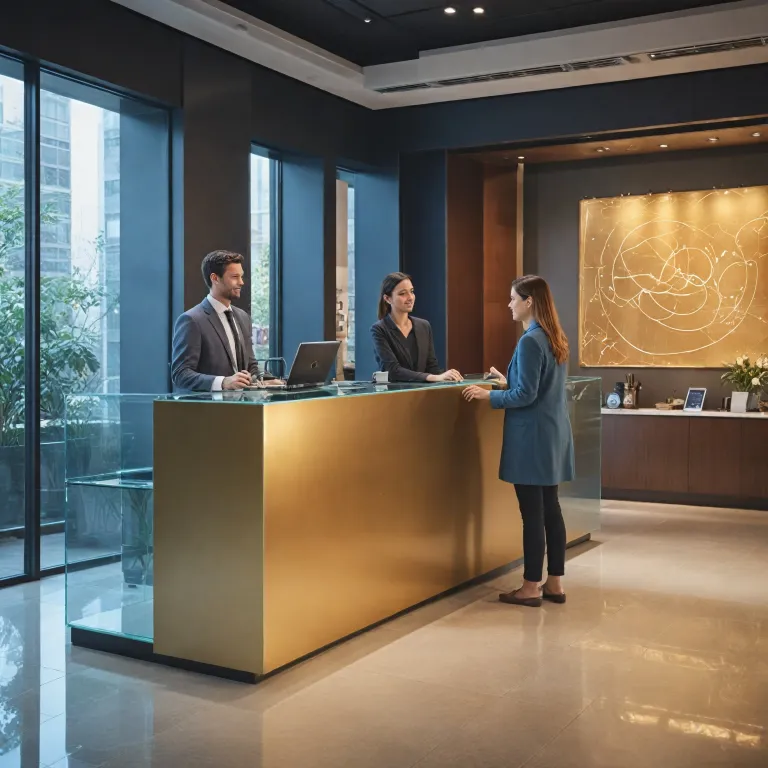
Aligning pre-hire solutions for retail hospitality with revenue strategy
In the hospitality industry, every hire subtly reshapes your revenue architecture. When pre-hire solutions for retail hospitality are aligned with pricing, distribution, and service design, they become a lever for RevPAR, NRevPAR, and ancillary revenue growth rather than a pure HR cost. Revenue managers and commercial leaders who treat hospitality staffing as a strategic asset can materially influence guest satisfaction, upsell conversion, and long term profitability.
High turnover in hospitality retail and food and beverage outlets erodes pricing power, because inexperienced candidates struggle to deliver consistent guest service at higher rate levels. Pre-hire solutions for retail hospitality, from structured assessments to predictive analytics, help recruitment teams filter candidate profiles for service aptitude, resilience, and commercial awareness before any time hire decision is made. This approach transforms the hiring process from reactive staffing solutions into a disciplined form of talent acquisition that supports brand positioning and rate strategy.
Vendors such as Prevue HR, eSkill, HighMatch, AlignMark, Hire Success, SHL, and AssessFirst provide software and assessment tools that evaluate candidate fit for demanding front line roles. Their hospitality recruitment and retail hospitality assessment models focus on skills, personality, and situational judgment that correlate with superior guest experience and stronger store performance. For revenue leaders, integrating these hospitality staffing insights into workforce planning helps anticipate staffing challenges around peak seasonal periods, protect service standards, and maintain pricing integrity across all hospitality businesses in the portfolio.
From staffing challenges to revenue levers in hospitality retail
Commercial leaders in hospitality retail know that understaffed shifts quickly translate into lost revenue. When staffing agency partners or internal recruitment teams rush hiring, the wrong candidates are placed into guest facing roles and both service quality and upsell potential deteriorate. Pre-hire solutions for retail hospitality allow talent acquisition teams to slow the decision at the right moment, using structured data to accelerate everything else in the process.
In practice, this means combining behavioral and skills assessments with applicant tracking software to streamline hiring while raising the bar on talent quality. By building calibrated talent pools for key roles such as front desk, reservations, and retail hospitality outlets, hospitality recruitment leaders can reduce time to hire without defaulting to temp hire options that dilute brand standards. Over time, this disciplined approach to hiring supports more stable teams, which in turn improves guest experience metrics and supports higher average daily rate.
Seasonal peaks remain a structural reality for the hospitality industry, especially in resorts, urban event hotels, and mixed use hospitality retail complexes. Pre-hire solutions for retail hospitality that incorporate predictive analytics help forecast which candidates are likely to stay for the full seasonal contract and potentially transition into long term roles. This reduces repeated recruitment costs, stabilizes hospitality staffing rosters, and gives revenue managers greater confidence when loading ambitious pricing strategies for high demand periods.
Designing assessment journeys around guest experience and upsell impact
For revenue managers, the most compelling argument for pre-hire solutions for retail hospitality is their measurable impact on guest experience and ancillary revenue. Assessments that simulate real service scenarios reveal how a candidate responds under pressure, handles complaints, and identifies subtle opportunities to upsell without harming satisfaction. When hospitality businesses systematically select talent with these capabilities, they create teams that naturally support premium pricing and higher capture rates.
Vendors in this space increasingly use gamified assessments and situational judgment tests to evaluate both individual candidate performance and broader talent pools. These tools help recruitment teams compare candidates for similar roles across multiple properties, ensuring consistent hiring standards in the united states and other key markets. As one expert summary notes, “Pre-hire assessments are tools used to evaluate potential employees' skills, personality traits, and suitability for specific roles before hiring.”
For commercial leaders, the key is to embed these hospitality recruitment insights into workforce planning dashboards alongside demand forecasts and pricing scenarios. When the hiring process flags a shortage of high potential talent for specific roles, revenue managers can adjust channel mix, service design, or opening hours in retail hospitality outlets. This integrated view of staffing solutions, guest service capacity, and revenue targets helps streamline hiring decisions while protecting both short term performance and long term brand equity.
Linking pre-hire analytics to revenue management and pricing decisions
Pre-hire solutions for retail hospitality generate a rich layer of data that is often underused by revenue management teams. Assessment scores, behavioral indicators, and predicted tenure can be aggregated to show how hospitality staffing quality varies by property, department, or staffing agency source. When these talent solutions metrics are correlated with RevPAR, NPS, and ancillary revenue, commercial leaders gain a clearer view of how hiring decisions influence financial outcomes.
Forward looking groups now integrate hospitality recruitment analytics into their commercial performance reviews, alongside pricing, distribution, and marketing KPIs. Articles such as elevating revenue management through managed services in the hospitality industry illustrate how external expertise can help structure these cross functional conversations. In the same spirit, talent acquisition and recruitment teams should sit at the revenue table when discussing seasonal strategies, new retail hospitality concepts, or service redesign.
For example, if predictive models from providers like AssessFirst indicate a strong pipeline of candidates suited to cross selling in mixed hospitality retail environments, revenue managers can confidently design more ambitious upsell programs. Conversely, where staffing challenges limit the availability of high performing talent, pricing strategies may need to favor simplicity and self service. In both cases, pre-hire solutions for retail hospitality help streamline hiring decisions while aligning the hiring process with realistic service capacity and guest experience ambitions.
Operationalizing talent acquisition for seasonal and long term performance
Hospitality businesses must balance the immediacy of seasonal hiring with the need to build resilient long term teams. Pre-hire solutions for retail hospitality support this balance by differentiating between candidates suited to short seasonal assignments and those with potential for progression into supervisory roles. Data from providers such as AssessFirst shows that structured assessments can significantly reduce onboarding time to productivity, which is critical when seasonal windows are short.
By using applicant tracking software and standardized assessments across all properties, recruitment teams can create reusable talent pools segmented by role, location, and availability. This allows hospitality staffing leaders to respond quickly to demand spikes without sacrificing the quality of the hiring process or over relying on temp hire arrangements. In parallel, talent acquisition teams can identify high potential candidates within these pools who are likely to thrive in more complex hospitality retail environments and guest service roles.
For revenue managers and commercial directors, the operational question is how to translate these staffing solutions into more reliable forecasting and pricing decisions. When pre-hire solutions for retail hospitality indicate strong candidate pipelines for key roles, hotels can confidently commit to group business, extend opening hours in retail outlets, or launch new service experiences. Where staffing challenges persist, commercial leaders may instead prioritize yield over volume, protecting guest experience and brand reputation while recruitment teams continue to refine their hospitality recruitment strategies.
Governance, compliance, and cross functional ownership of hiring quality
As pre-hire solutions for retail hospitality become more sophisticated, governance and cross functional ownership grow in importance. Commercial leaders must ensure that hiring software, assessments, and staffing agency partnerships comply with local regulations in the united states and other jurisdictions, while remaining transparent and fair to all candidates. Clear policies around data usage, assessment validity, and equal opportunity help protect both the hospitality industry brand and individual hospitality businesses.
Revenue managers, directeurs commerciaux, and HR leaders should jointly define the competencies that matter most for guest service, upsell, and operational efficiency. These competencies then guide the design of assessments, the configuration of applicant tracking workflows, and the evaluation of staffing solutions providers. When recruitment teams, talent acquisition specialists, and commercial leaders share ownership of hiring quality, pre-hire solutions for retail hospitality become a core part of the commercial strategy rather than a peripheral HR tool.
Finally, governance should extend to continuous performance review, linking hiring process outcomes to real world metrics such as guest satisfaction, upsell conversion, and staff retention over time. By regularly reviewing how different roles, agencies, and assessment profiles perform, hospitality staffing leaders can refine their approach to both seasonal and long term hire decisions. This disciplined, data informed collaboration ensures that pre-hire solutions for retail hospitality remain tightly connected to revenue management objectives and the evolving expectations of guests across the hospitality retail landscape.
Key quantitative impacts of pre-hire assessment strategies
- Reduction in onboarding time to productivity : 46 percent.
- Increase in customer satisfaction through talent alignment : 33 percent.
- Growth in internal mobility from floor to manager roles : 3 times.
Frequently asked questions about pre-hire solutions for retail hospitality
What are pre-hire assessments ?
Pre-hire assessments are tools used to evaluate potential employees' skills, personality traits, and suitability for specific roles before hiring. In the hospitality industry and retail hospitality environments, they help identify candidates who can handle guest interactions, operational pressure, and commercial objectives. These assessments support recruitment teams and talent acquisition specialists in making more consistent and defensible hiring decisions.
Why are pre-hire assessments important in retail and hospitality ?
They help identify candidates who align with company values and job requirements, reduce turnover, and enhance customer satisfaction. For hospitality businesses, this alignment is critical because service failures directly affect revenue, reputation, and pricing power. By using structured pre-hire solutions for retail hospitality, staffing solutions become more predictive and less reactive.
What types of pre-hire assessments are commonly used ?
Common types include cognitive ability tests, personality assessments, situational judgment tests, and skills tests. In hospitality staffing and hospitality recruitment, these tools are often combined with video interviews and work sample tasks that mirror real guest service scenarios. This mix provides a richer view of each candidate and supports better matching between roles, properties, and seasonal or long term needs.
How do gamified assessments work ?
Gamified assessments use interactive, game like scenarios to evaluate candidates' abilities and traits in an engaging manner. In retail hospitality and hospitality retail contexts, they can simulate queue management, complaint handling, or cross selling opportunities. This format keeps candidates engaged while giving recruitment teams deeper insight into real time decision making and service behavior.
Can pre-hire assessments predict employee tenure ?
Yes, predictive analytics in pre-hire assessments can forecast candidate success and likelihood of long term employment. For hospitality businesses facing recurring seasonal hiring cycles and chronic staffing challenges, this predictive layer is particularly valuable. It helps reduce repeated recruitment costs, stabilize teams, and support more confident revenue management and pricing strategies.