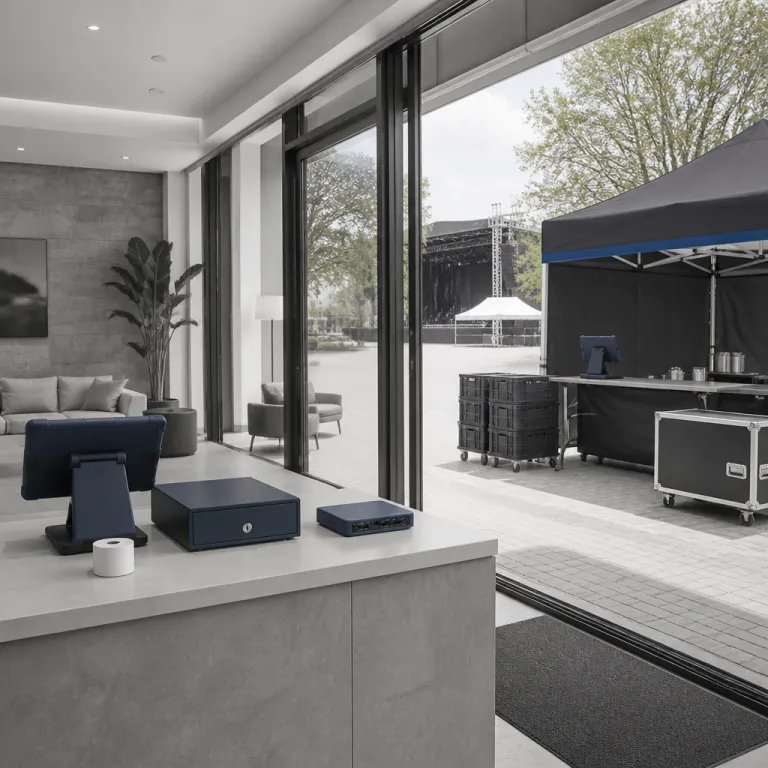
Why music event grade POS belongs in hotel revenue strategy
Revenue leaders in hospitality increasingly look at music festivals as live laboratories for high velocity commerce. The phrase pos systems deployment music events revenue collection data management now signals a strategic benchmark rather than a niche use case, because event organizers have proven that tightly orchestrated systems can process thousands of transactions per hour with remarkable accuracy. For hotel groups, adopting similar point of sale and data management practices can transform both topline revenue and operational discipline.
At large music events, organizers, POS vendors and payment processors collaborate to deploy integrated point of sale networks that handle every payment in real time across bars, food stands and merchandising. These same systems, when adapted to hotel environments, give revenue managers granular customer data on ancillary spend, enabling precise pricing, better forecasting and more agile management of promotions. The core lesson is simple yet powerful: when payment systems, analytics tools and management platforms are designed as one platform instead of silos, revenue collection and data collection become strategic assets rather than back office chores.
Music events have already validated cashless systems payment models using RFID wristbands and mobile payment apps, where the average transaction speed can fall to around 3.5 seconds according to NOQ Group (see, for example, NOQ Group’s published event benchmarks). That level of payment processing efficiency, combined with robust iot connectivity and cellular connectivity, shows what is possible when connectivity, security and service are engineered together from the start. For hotel revenue leaders, the question is no longer whether these solutions work, but how quickly they can be adapted to every point sale on property, from rooftop bars to spa reception.
Designing a unified POS and RMS architecture inspired by music events
Music events operate as temporary smart cities, where every bar, food truck and VIP area becomes a connected point sale node. Behind the scenes, a unified platform orchestrates end to end pos systems deployment for music events, revenue collection and data management, linking payment systems, access control, digital signage and inventory into one coherent operational view. Hotels can mirror this architecture by treating each outlet, kiosk and mobile staff device as part of a single revenue and data management fabric.
In practice, this means selecting POS and Revenue Management Systems that expose robust APIs, so that payment processing, customer data, analytics platforms and document management tools exchange données without friction. When RMS, channel manager and POS share the same management platforms, revenue managers can align room pricing with real time demand signals from restaurants, bars, meeting spaces and even event payment flows. For a deeper view on how integrated commercial architectures support complex markets, hospitality leaders can review these revenue management strategies for large trade events, then transpose the same logic to festival style operations on property.
Music events also highlight the importance of iot and iot connectivity, where terminals, RFID readers and digital signage screens are monitored as part of a single operational system. Hotels can extend this concept by connecting payment terminals, kiosks, minibar sensors and even parking access control to analytics systems that feed the RMS with real time ancillary demand. When such systems are in place, revenue managers gain a live view of spend by segment, by time of day and by event, enabling more confident decisions on minimum spends, package inclusions and loyalty programs design.
From festival bars to hotel outlets: operational excellence at the point of sale
At major festivals, the context is unforgiving; thousands of guests expect fast service, transparent pricing and frictionless payment at every bar and food stand. Event organizers therefore treat integrated point of sale deployment, event payment flows, revenue collection and data management as a core operational discipline, not a technical afterthought, because any failure at the point sale immediately damages both revenue and brand perception. Hotels that host concerts, rooftop parties or large banqueting operations face similar stakes, only spread over a longer durée.
To match festival grade performance, hotel F&B and revenue teams must align on standardised systems payment processes, staff training and monitoring routines. This includes configuring payment systems to accept multiple payment methods, ensuring cellular connectivity or Wi Fi redundancy for outdoor venues, and using analytics platforms to track queue times, average check and payment processing failures in real time. When operational leaders treat each outlet as an event, with clear KPIs and reporting dashboards, they can adjust staffing, menu engineering and pricing dynamically rather than waiting for end of month reporting.
Music events also show how digital signage, loyalty programs and customer support can be orchestrated around the same platform that powers the pos. Hotels can replicate this by linking POS receipts to loyalty programs enrolment, by pushing targeted offers on digital signage near high traffic outlets, and by routing customer support issues directly from the POS interface to service teams. For a broader view on how integrated tools reshape commercial performance, revenue leaders can examine this guide on how a channel manager transforms hotel revenue performance, then apply the same integration mindset to every point of sale on property.
Data, analytics and monitoring: turning transactions into revenue intelligence
Cashless music events have become exemplars of how to transform raw payment data into actionable analytics for pricing and operations. Organizers routinely analyse sales data, attendee spending patterns and inventory levels to refine product mix, staffing and layout for the next event, which is exactly what hotel revenue managers should expect from their own analytics systems. When event grade point of sale deployment, revenue collection and data management are handled through a unified analytics platform, every transaction becomes a data point for future strategy.
For hospitality, the priority is to ensure that customer data from every point sale flows into central data management and document management environments with clear governance. This includes defining how long données are retained, how they are anonymised for analytics, and how access control is enforced so that only authorised équipes can view sensitive information. Once these foundations are in place, analytics platforms can correlate room revenue with ancillary spend, track the impact of loyalty programs on total value, and surface real time alerts when operational anomalies appear.
Music events also demonstrate the value of monitoring and reporting in real time, where dashboards show transaction volumes, average transaction speed and system health across hundreds of terminals. Hotels can adopt similar monitoring practices, using iot connectivity and cellular connectivity to supervise remote outlets, pool bars or pop up event payment stations. When revenue managers have access to such reporting, they can intervene quickly during high demand periods, adjust minimum spends or close underperforming points of sale, rather than waiting for post event analysis.
Security, compliance and trust across transient and permanent venues
Temporary music events face acute security challenges because they must deploy payment systems, iot devices and connectivity in unfamiliar venues, then dismantle everything within days. This pressure has forced event organizers and POS vendors to harden their systems payment architectures, encrypt customer data end to end and implement strict access control for staff handling terminals or back office platforms. Hotels can benefit directly from these advances by adopting similar security and compliance standards for their permanent point sale environments.
In practice, this means choosing pos systems and management platforms that support tokenised payment processing, role based access control and detailed audit trails for every operational action. It also requires clear procedures for document management, so that chargeback evidence, customer support logs and incident reports are stored securely yet remain accessible for dispute resolution. When security, service quality and data management are treated as a single discipline, both music events and hotels can reassure guests that their payment and loyalty programs information is handled with rigour.
Real time monitoring of iot devices, from terminals to digital signage screens, further strengthens security by detecting anomalies such as unexpected firmware changes or unusual transaction patterns. Music events already rely on such monitoring to protect thousands of attendees using RFID wristbands or mobile wallets, and hotels can extend the same approach to parking access control, spa check in kiosks and conference registration desks. By aligning security practices across transient event payment setups and permanent hotel infrastructures, brands build consistent trust that directly supports higher conversion and repeat visitation.
From music events to multi property portfolios: scaling platforms and processes
Large festival operators often run hundreds of music events across various cities and countries, yet they maintain consistent standards for pos systems deployment music events revenue collection data management. Their secret lies in replicable management platforms, standardised APIs and shared analytics systems that allow local équipes to operate autonomously while central teams retain strategic oversight. Hotel groups facing multi property complexity can adopt the same playbook to harmonise revenue practices across resorts, urban hotels and mixed use venues.
For groups, the objective is to design a core platform where systems, data management, analytics platforms and document management are shared, while allowing local customisation for menus, currencies and regulatory requirements. This architecture supports group level reporting on supply chain efficiency, payment processing performance and loyalty programs engagement, while still empowering property teams to adapt to local demand and event calendars. When such systems are in place, revenue managers can benchmark properties on ancillary revenue per guest, event payment conversion and operational uptime, then target support where it will lift portfolio wide results.
Scaling also requires disciplined training and support, mirroring how event organizers train staff before each festival on payment systems, customer service and incident handling. Hotel groups should invest in continuous training for F&B, front office and events équipes, supported by clear playbooks and monitoring dashboards that highlight real time performance. To avoid costly missteps when selecting or upgrading these platforms, executives can use this checklist of RMS demo questions that prevent seven figure mistakes, then apply the same rigour when evaluating POS, analytics and iot connectivity vendors.
Key statistics and performance benchmarks for event grade POS in hospitality
- Average transaction speed at leading cashless music events is around 3.5 seconds per purchase according to NOQ Group, which sets a realistic benchmark for hotel bars and pop up venues aiming to reduce queues during peak periods. NOQ’s published case studies on large festivals provide supporting data for this benchmark.
- Technology providers such as Intellitix report powering roughly 2 000 events globally, illustrating that large scale cashless systems payment deployments are mature and can be adapted to complex hotel and resort environments. Intellitix’s own event portfolio summaries highlight the breadth of these deployments.
- Hotels that integrate POS, RMS and CRM into unified analytics systems typically see measurable improvements in ancillary revenue per occupied room, often in the range of 5 to 15 percent, when they actively use customer data to personalise offers and loyalty programs. Industry case studies from major brands such as Accor and Marriott have reported uplift in this order of magnitude when rolling out integrated commercial platforms.
- Real time monitoring of iot devices and payment systems can reduce unplanned downtime at the point sale by more than 30 percent, which directly protects revenue during high demand events and banqueting operations. This figure is consistent with vendor reported outcomes from hospitality focused network monitoring and payment gateway providers.
- Properties that standardise document management and access control for payment disputes often cut chargeback resolution times by several days, improving cash flow predictability and reducing operational workload for finance équipes. Internal audits at multi property groups frequently highlight faster dispute cycles once workflows are centralised.
FAQ: POS, events and revenue management for hospitality leaders
What are the benefits of using POS systems at music events?
They streamline transactions, enhance data accuracy, and improve attendee experience. For hotels, adopting similar pos systems and analytics platforms can accelerate service at bars and banqueting while feeding precise data into Revenue Management Systems. This combination supports better pricing, more targeted promotions and stronger overall Performance Commerciale.
How do cashless payment systems work at events?
Attendees use RFID wristbands or mobile apps to make purchases, reducing cash handling. The same model can be applied to resort wristbands, conference badges or room keys, turning them into secure payment tokens across every point sale. Hotels then gain consolidated customer data on spend by outlet and by time, which can be analysed in real time for operational and pricing decisions.
What data can be collected through event POS systems?
Sales data, attendee spending patterns, and inventory levels. When hotels integrate these données with RMS and CRM, they can understand which segments respond to specific offers, which events drive the highest ancillary revenue, and where supply chain or staffing adjustments are needed. Strong data management and document management practices ensure that this information remains compliant and trustworthy.
How can hotels adapt music event POS practices to their properties ?
Hotels should start by mapping every point sale, from restaurants to pop up event payment stations, then selecting pos systems and management platforms that integrate via APIs with existing RMS and CRM. Training équipes on cashless workflows, monitoring dashboards and incident handling is essential to replicate festival grade performance. Over time, revenue managers can refine pricing, loyalty programs and operational standards based on analytics systems that mirror those used at large music events.
What role does connectivity play in event grade POS for hotels ?
Reliable connectivity, including Wi Fi, iot connectivity and cellular connectivity, is critical to keep payment processing and analytics platforms running in real time. Music events often deploy redundant networks to protect revenue during peak demand, and hotels should adopt similar redundancy for outdoor venues, rooftops and remote outlets. Continuous monitoring of systems and access control further ensures that both security and service quality remain high across the entire property.