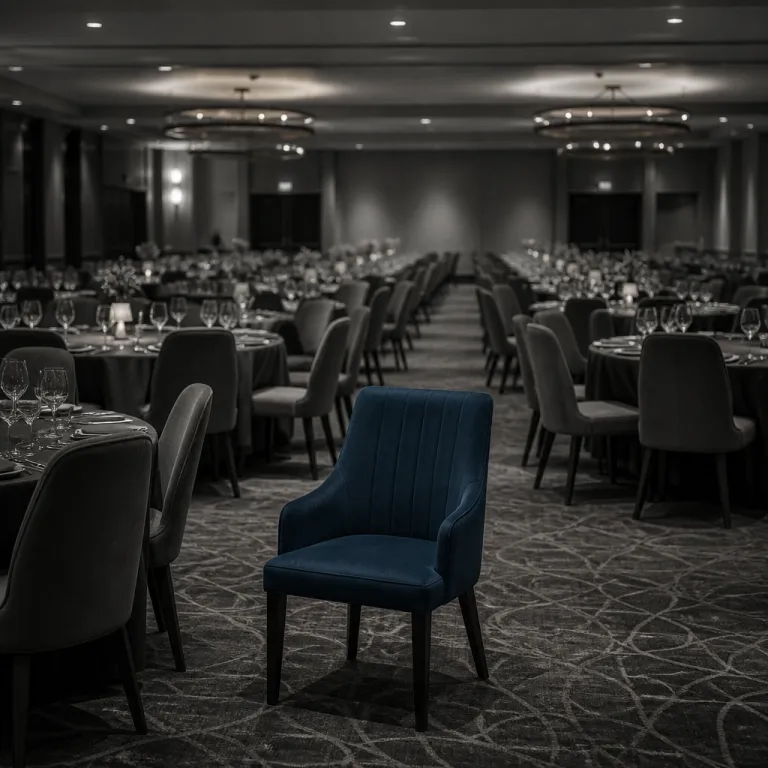
Why Lauriston Hotel capacity should reshape your sales and revenue alignment
The Lauriston Hotel function room capacity of up to 200 guests is not just an operational fact; it is a strategic lever for commercial leaders. When a single meeting room can flex from intimate private dinners to large celebrations, sales and revenue management must jointly design segmentation, pricing fences, and minimum spends that reflect this elasticity. In Ardrossan, a coastal town rather than a major city, this scale of space behaves differently from a typical hotel in an Edinburgh centre location, and that nuance should drive your commercial playbook.
Revenue managers who benchmark Lauriston Hotel only against a generic hotel Edinburgh or inn Edinburgh competitive set risk mispricing the event space and underestimating local demand patterns. The venue’s position on South Crescent Road, with onsite parking and easily accessible facilities, means that the catchment area extends beyond the immediate town into the wider Ayrshire region, which changes the optimal balance between weddings, wakes, and corporate events. In practice, this means your sales team must qualify each enquiry not only by date and budget, but also by event type, length of stay, and ancillary spend potential, then share these data in real time with revenue management.
Commercial directors often compare Lauriston Hotel to a place hotel in an Edinburgh city context, such as a Novotel Edinburgh property with multiple meeting rooms and a full conference suite. That comparison is useful only if you adjust for the fact that Lauriston operates one primary event space, supported by flexible lighting, Wi‑Fi, projector, and screen, rather than a full portfolio of rooms and suites. The Lauriston Hotel meetings and events spaces capacity therefore requires a more surgical approach to function space allocation, where every event blocked in the diary is evaluated against alternative demand scenarios, just as you would for a high‑demand night in a busy hotel in the heart Edinburgh or near Edinburgh Haymarket.
From generic MICE metrics to space specific KPIs for Lauriston Hotel
Traditional MICE reporting often stops at total events, average daily rate, and revenue per available square metre, which is too superficial for the Lauriston Hotel meetings and events spaces capacity. With only one formal meeting room and a maximum of 200 guests, the real question is how many high‑value events you can host per month without eroding guest satisfaction or operational quality. Revenue managers should therefore build a KPI set that mirrors what sophisticated brands like Novotel use in their conference hotels, but adapted to a single‑space model.
For example, instead of tracking generic meeting rooms utilisation, measure the proportion of days where the Lauriston event space is used for more than one function, such as a morning business meeting followed by an evening private celebration. This metric, combined with enquiry conversion by event type, will show whether your sales team is prioritising the right mix of corporate and social events for the town and wider region. Consultants and RMS vendors can then calibrate pricing rules so that a small meeting for ten persons does not block the entire capacity during peak demand dates when a 150‑person banquet would deliver a far higher ROI.
Commercial leaders who manage portfolios including Novotel Edinburgh or a central hotel Edinburgh asset can use those properties as reference points, but they must not copy‑paste their KPI frameworks. In an Edinburgh town or Edinburgh city conference hotel, you might optimise across several venues and breakout rooms, while at Lauriston you are optimising the single core space and its supporting facilities. To deepen this analytical approach, compare your event space performance with benchmarks from advanced revenue management case studies, such as those discussed in analyses of optimising revenue management and commercial performance across different accommodation types, and adapt the methodology to a meetings and events context.
Aligning sales narratives with capacity led revenue strategy
Sales teams often sell the Lauriston Hotel meetings and events spaces capacity as a simple number, yet revenue leaders know that the real asset is flexibility. The same space can host a 40‑person business meeting with classroom‑style seating, a 120‑guest wedding reception, or a 200‑person standing event, and each configuration has different revenue and cost implications. To align sales and revenue, you must script narratives and proposals that reflect these trade‑offs, rather than promising maximum capacity by default.
When a corporate client requests a conference‑style meeting room for 80 delegates, the sales manager should immediately understand how this booking compares to a potential weekend social event for 150 guests in terms of total revenue, ancillary spend, and operational strain. This requires transparent sharing of historical data on bar revenue, house catering margins, and ancillary services such as system music, projector, and screen usage, which are often overlooked in traditional pricing. By integrating these insights into your RMS and CRM, you can guide the sales team towards offers that protect both rate integrity and guest satisfaction.
Groups that operate both regional venues like Lauriston and urban assets near Edinburgh Haymarket or in the heart Edinburgh, such as a Novotel Edinburgh or a boutique inn Edinburgh, should codify these narratives into playbooks. These documents should explain how to position a coastal town venue versus a centre‑located hotel Edinburgh property, and when to emphasise natural light, sea views, or easily accessible parking over pure city centre convenience. For inspiration on how digital twins and advanced visualisation are reshaping commercial storytelling, revenue leaders can study analyses of how immersive booking experiences influence revenue management and commercial performance, then apply similar thinking to the way they present meeting and event spaces.
Pricing architecture for a single large event space
The Lauriston Hotel meetings and events spaces capacity of 200 people invites a tiered pricing architecture that goes beyond simple room hire plus catering. Revenue managers should design a matrix that differentiates between weekday business meetings, weekend social events, and high‑demand seasonal dates, with clear minimum spends and cancellation terms. This matrix must be co‑created with the sales team so that every proposal sent from the hotel reflects the same strategy and protects profitability.
For weekday corporate business, a competitive room hire that includes Wi‑Fi, projector, and screen can be combined with optional upgrades such as enhanced system music, extended hours, or premium house catering menus. Social events, by contrast, may be priced with a lower or even waived room hire, but higher per‑person catering and beverage minimums, especially when the event uses the full capacity of the space. In both cases, the pricing should reflect the opportunity cost of blocking the meeting room for set‑up and breakdown, which can easily consume a full day in the diary.
Groups that also manage a Novotel Edinburgh or a large conference hotel in an Edinburgh centre location can use those properties to benchmark per‑person spend and ancillary revenue, but they must adjust for the different demand drivers in a coastal town. A city‑based hotel Edinburgh might rely heavily on multi‑day conferences with breakout rooms and suites, while Lauriston focuses on single‑day events with strong local attendance. To ensure that digital acquisition costs do not erode margins on these events, commercial leaders should also analyse the impact of metasearch and paid media on event enquiries, using frameworks similar to those discussed in analyses of the true cost of hotel metasearch and its impact on guest retention.
Operational design, guest experience, and data feedback loops
Aligning sales and revenue around the Lauriston Hotel meetings and events spaces capacity only works if operations can consistently deliver the promised experience. The venue’s facilities, including Wi‑Fi, projector, screen, flexible lighting, and onsite parking, must be maintained to a standard that supports both corporate meetings and emotional family events. Any failure in these touchpoints directly impacts guest satisfaction scores and, by extension, the pricing power that revenue managers can sustain.
To close the loop, commercial leaders should implement structured post‑event feedback that captures both quantitative ratings and qualitative comments on the meeting room, catering, and service. These data should be analysed by event type, party size, and configuration, so that you can see whether, for example, 150‑guest weddings rate the space differently from 40‑person business meetings. When patterns emerge, such as recurring praise for natural light or criticism of acoustics when system music is used at high volume, the revenue and sales teams must work with operations to adjust layouts, equipment, or even pricing promises.
Hotel groups that also operate in Edinburgh city or near Edinburgh Haymarket can compare these feedback patterns with those from their urban venues, such as a Novotel Edinburgh or a central inn Edinburgh, to understand how expectations differ between a coastal town and a dense city centre. This comparative analysis can reveal, for instance, that corporate clients value easily accessible parking and quieter surroundings at Lauriston more than proximity to an Edinburgh centre office district. Armed with this insight, sales teams can reposition the venue as a retreat‑style conference and meeting destination, while revenue managers refine segmentation and pricing to reflect this differentiated value proposition.
Translating Lauriston insights into portfolio wide commercial performance
The discipline required to optimise the Lauriston Hotel meetings and events spaces capacity can become a template for portfolio‑wide commercial excellence. When revenue managers and commercial directors learn to extract maximum value from a single meeting room with 200‑person capacity, they sharpen their ability to evaluate opportunity cost, segment demand, and align pricing with operational reality. These skills transfer directly to larger hotels with multiple meeting rooms, suites, and function venues across both town and city locations.
Groups that manage assets in Edinburgh town, Edinburgh city, and regional markets can use Lauriston as a laboratory for testing new pricing fences, enquiry qualification scripts, and sales incentives. For example, you might pilot a dynamic minimum spend model for private events at Lauriston, then roll it out to a Novotel Edinburgh or a centre‑located hotel Edinburgh once the concept is proven. Consultants and RMS vendors can support this process by configuring systems to capture granular event‑level data, such as per‑person spend by event type, utilisation of projector and screen, and uptake of house catering packages.
One practical step is to standardise how you describe and code event spaces across the portfolio, whether they are in a place hotel on Lauriston Place in place Edinburgh, a business‑focused inn Edinburgh near Edinburgh Haymarket, or a resort‑style property in another town. This common language allows you to compare performance fairly and identify where natural daylight, natural light, or specific facilities such as system music and projector flipchart combinations drive higher guest satisfaction and revenue. As one reference succinctly states, “The event space can accommodate up to 200 people.” and “Amenities include Wi‑Fi, projector, screen, and flexible lighting.”, which underlines how a clear, factual description of capacity and facilities is the foundation for any serious commercial performance strategy.
Key figures for Lauriston Hotel meetings and events performance
- The Lauriston Hotel meetings and events spaces capacity reaches up to 200 people for a single function, which positions the venue competitively within the Ayrshire region compared with many small town hotels that cap at 80 to 120 guests (source: Meetings & Conventions listing for Lauriston Hotel, accessed 2024; figures should be verified against the latest venue specifications).
- The property operates one primary meeting room dedicated to events, meaning that every day blocked for a conference, meeting, or private celebration represents 100% of available function inventory, unlike multi‑room conference hotels where risk is diversified (source: Meetings & Conventions venue data, 2024; confirm against current hotel fact sheet).
- Flexible lighting, Wi‑Fi, projector, and screen are included as core facilities in the meeting room, reducing the need for external AV hire and improving margins on corporate events where technology costs can otherwise consume an estimated 10 to 15% of total revenue (source: Lauriston Hotel venue hire information and typical UK AV pricing benchmarks from industry reports, 2023–2024).
- Onsite parking and accessible facilities expand the catchment area beyond Ardrossan town, enabling the hotel to attract events from a radius of roughly 30 to 50 km, which is significant in regional markets where public transport is less dense than in Edinburgh city (source: regional transport patterns and venue accessibility studies from Scottish tourism and transport authorities, 2022–2024).
FAQ about Lauriston Hotel meetings and events spaces capacity
What is the maximum capacity of the Lauriston Hotel event space?
The Lauriston Hotel meetings and events spaces capacity allows for up to 200 people in a single event configuration. This maximum is typically used for standing receptions or theatre‑style layouts, while seated banquets may use slightly lower numbers for comfort. Revenue managers should model different layouts to understand how capacity impacts average spend per person and staffing costs.
How many meeting rooms does Lauriston Hotel offer for events?
The venue operates one primary meeting room that is used for a wide range of events, from business meetings to weddings and wakes. This single‑room model means that each event blocks the full function inventory for its time slot. Commercial teams must therefore be selective about which events they accept on peak dates to protect overall revenue.
Which facilities are included in the Lauriston Hotel meeting room?
The meeting room includes Wi‑Fi, a projector, a screen, and flexible lighting as standard facilities. These amenities support both corporate conferences and private social events without requiring extensive external equipment hire. When pricing events, revenue managers should factor in the value of these inclusions, especially for business clients who might otherwise pay separately for AV services.
Is the Lauriston Hotel event space suitable for corporate meetings as well as social events?
Yes, the Lauriston Hotel meetings and events spaces capacity and layout are designed to accommodate both corporate and social functions. The room can be configured for conferences, training sessions, and board‑style meetings, as well as weddings, christenings, and celebrations of life. This versatility is a key asset, but it also requires careful segmentation and pricing to balance weekday business demand with weekend social events.
How should revenue managers benchmark Lauriston against city centre conference hotels?
Revenue managers should compare Lauriston’s performance with city centre hotels, such as those in Edinburgh centre, but always adjust for differences in location, number of meeting rooms, and demand drivers. A hotel Edinburgh with multiple venues and suites will have different utilisation patterns and ancillary revenue streams. The most meaningful benchmarks focus on revenue per available event hour, conversion by event type, and guest satisfaction scores, rather than simple capacity comparisons.