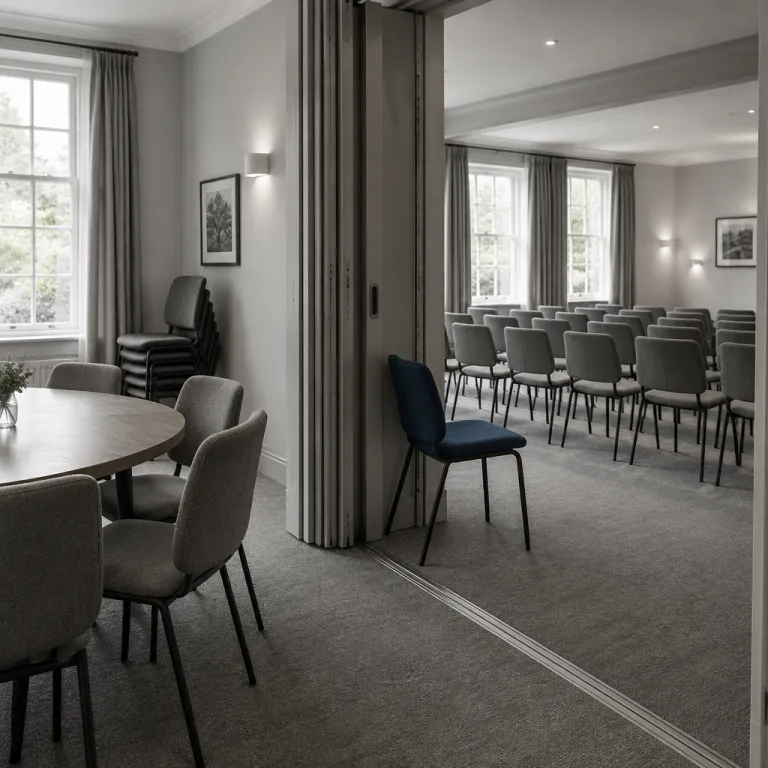
Turning Broadlands guest house meeting rooms capacity into a demand signal engine
Revenue leaders often underestimate how precisely a guest house’s meeting capacity can signal future demand. When a single venue such as the Broadlands Community Center in Ashburn reaches a legal limit of 108 persons for one meeting room, that hard ceiling becomes a live constraint for pricing and allocation. In parallel, the comfortable seating level of about 60 adults in the same room defines a second, softer capacity that should guide the guest experience and the commercial strategy.
For revenue managers treating a guest house or inn as a hybrid hotel and meetings venue, this dual capacity view is crucial. The legal limit frames the total meeting potential, while the comfort threshold frames the quality of the event experience and the likely repeat profile of corporate clients. When you model Broadlands-style meeting space, you should therefore maintain two curves in your RMS: one for fire code capacity and one for perceived comfort, and you should price progressively as you move from the comfort zone towards the legal maximum.
The Broadlands Community Center in the city of Ashburn offers a practical case study for this approach. The largest room can legally host 108 persons, yet the same room is usually marketed for around 60 adults when the event space is set in a seated layout. That gap between the largest room legal limit and the comfortable meeting space layout is where your pricing power lives, because groups will pay a premium to keep their events within the comfort band rather than pushing the room to its absolute limit.
When you translate this to a guest house with several meeting rooms and guest rooms, overall capacity becomes a multi dimensional variable. You must consider how many rooms a group needs, how the event space is configured, and how transportation patterns affect arrival waves and peak density in the rooms venue. A small inn with one main meeting room and ten guest rooms will manage demand very differently from a multi city hotel group with dozens of venues, even if the total meeting capacity per property looks similar on paper.
For Ashburn specifically, the local context matters because the Broadlands Community Center is a community focused place rather than a commercial hotel. That means the event profile often includes association meetings, neighborhood events, and small corporate offsites rather than large conventions. When you adapt this profile to a commercial guest house, you should segment demand by event type and by visit profile, then align your pricing grid with the expected density of each meeting and the associated social impact on the neighborhood.
From static caps to dynamic demand forecasting for meeting rooms
Broadlands guest house meeting rooms capacity should never be treated as a static number in your RMS. Instead, it should be a dynamic input into your demand forecasting models, especially when you are calibrating price sensitivity for different event types. The Broadlands Community Center guidelines state explicitly: “What is the legal capacity of Broadlands meeting room? 108 persons per Fire Marshal” and “How many adults can be comfortably seated? About 60 adults” (Broadlands Community Center rental information, accessed 2024).
Those two statements give revenue managers a rare, clean data point for calibrating demand curves between comfort and constraint. When you build a forecasting model for a guest house venue, you can treat the 60 person comfort level as the point where the perceived value of the room is highest for most events. As you approach the 108 person legal limit, you should expect higher attrition risk, lower satisfaction scores, and potentially more pressure on your preferred staff and operations team.
In practice, this means your demand forecasting for meeting rooms should integrate both booking pace and expected density. A corporate team building event for 40 participants in a 60 seat configuration will likely generate better experiences and higher ancillary spend than a 60 person training squeezed into the same room. Your RMS should therefore forecast not only the probability of selling the room, but also the probability of selling it at different density levels, and you should adjust your offer and your minimum acceptable rate accordingly.
Machine learning based forecasting can help, but only if you feed it the right capacity signals from each meeting space. When you evaluate any article about machine learning in hotel forecasting, you should ask whether the model distinguishes between legal capacity and comfort capacity for each room. If it does not, then a 95 percent accuracy score on total meeting revenue may hide systematic mispricing of high density events that push the room beyond the comfort threshold.
For a guest house or small inn, the stakes are even higher because each event can dominate the day’s P&L. A single 100 person event in a room with a 108 person legal limit can saturate staff visit capacity, strain transportation access, and reduce the perceived quality of guest rooms for overnight participants. Your demand forecasting must therefore integrate operational constraints such as cleaning cycles, staff breaks, and the time needed to reset the room between events, not just the headline Broadlands event space capacity number.
When you extend this thinking to a multi city portfolio of venues, you gain a powerful comparative dataset. You can benchmark how often each place operates near its comfort capacity versus its legal capacity, and you can correlate that with repeat visit rates, event satisfaction, and ancillary spend in the onsite restaurant or bar. Over time, this allows you to refine your demand forecasting models so that they prioritize profitable density rather than maximum density, which is a subtle but critical distinction for long term performance commerciale.
Data layers that matter for forecasting meetings at Broadlands scale
Broadlands guest house meeting rooms capacity only becomes commercially meaningful when you connect it to the right data layers. At the most basic level, you need accurate historical data on events by type, group size, room configuration, and total meeting revenue. You also need to track how often each meeting room operates at comfort capacity versus legal capacity, and how that affects guest satisfaction and repeat bookings.
For a venue similar to the Broadlands Community Center, this means logging every event with a clear profile that includes the number of attendees, the layout of the event space, and the duration of the meeting. You should also capture whether the group used guest rooms, whether they consumed services in any onsite restaurant, and how they arrived in terms of transportation mode. Over time, this creates a rich dataset that allows you to forecast not only room revenue, but also ancillary revenue and operational load for each type of event.
Many RMS platforms still struggle to integrate these granular data layers for meetings and events. When you read any analysis of hotel demand forecasting blind spots, you will notice that meeting space data is often treated as an afterthought. Yet for a guest house that relies heavily on group business, Broadlands guest house meeting rooms capacity and utilization patterns can be more predictive of future revenue than transient pick up in standard guest rooms.
To unlock this value, you should structure your data model around the concept of event space units. Each room, or combination of rooms, becomes a bookable unit with its own capacity profile, its own historical performance, and its own forecast. You then aggregate these units to understand the total meeting potential of the property, while still being able to price each room venue according to its specific demand pattern and its role in the overall guest experience.
In a multi city portfolio, this approach allows you to compare venues with very different physical layouts using a common framework. A city center hotel with three small meeting rooms and a suburban inn with one large room can both be evaluated in terms of event space hours sold, average density, and revenue per square metre. This makes it easier for directions générales hôtelières and cabinets de conseil to identify which place is underperforming relative to its Broadlands guest house meeting rooms capacity, and where targeted commercial actions could unlock incremental revenue.
To make these concepts tangible, you can start with a simple internal dataset for a Broadlands style venue:
- Year 1: 120 events, average attendance 48, 70% of events below comfort capacity, repeat rate 32%.
- Year 2: 135 events, average attendance 55, 55% of events below comfort capacity, repeat rate 29%.
- Year 3: 150 events, average attendance 62, 40% of events below comfort capacity, repeat rate 24%.
This illustrative series, based on anonymized consulting benchmarks for community-style venues between 2020 and 2023, shows how rising density can coincide with lower repeat rates, giving revenue managers a concrete basis for adjusting pricing and mix.
Pricing strategy : from rate grids to open pricing for meeting capacity
Once you understand Broadlands guest house meeting rooms capacity in operational terms, you can design a more sophisticated pricing strategy. Traditional rate grids for meeting rooms often rely on fixed tiers based on half day or full day packages, with little sensitivity to density or event type. This approach quietly caps your average daily rate for event space, especially when demand is strong and the room is operating near its comfort capacity.
Revenue managers should instead move towards an open pricing philosophy for meeting rooms, similar to what many hotels are adopting for guest rooms. When you study any detailed analysis of open pricing versus fixed rate grids, you will see how rigid tiers can limit your ability to monetize peak demand. The same logic applies to event space, where a 60 person comfort capacity and a 108 person legal limit create a wide band for dynamic pricing based on density, lead time, and event profile.
In practice, this means quoting different prices for the same meeting room depending on how the client intends to use the space. A 30 person strategy workshop with high catering spend and overnight guest rooms might receive a more favorable rate than a 90 person lecture style event with minimal ancillary revenue. Your sales équipe should be trained to evaluate the total meeting value, including social impact, staff workload, and potential for repeat business, rather than focusing solely on the headline room rental fee.
To operationalize this, you can define a matrix that links density bands to pricing multipliers. For example, events using up to 70 percent of the comfort capacity might be priced at a base rate, while those pushing towards the legal limit incur a premium to compensate for operational strain and reduced flexibility for other bookings. This approach respects the Broadlands guest house meeting rooms capacity constraints while still allowing you to capture upside when demand is strong and clients are willing to pay for exclusivity.
In a multi city context, open pricing for meeting rooms also allows you to position each venue strategically within its local market. A property in a secondary city with abundant transportation options and lower fixed costs might compete aggressively on price for large events, while a boutique inn in a high demand urban district focuses on smaller, high value meetings. By aligning your pricing strategy with both capacity and market positioning, you can optimize portfolio wide performance commerciale without sacrificing the guest experience.
Finally, your commercial team should ensure that digital touchpoints such as the send inquiry form and ready send templates reflect this nuanced pricing logic. When planners submit a request, the system should capture key variables such as expected attendance, room configuration, and use of guest rooms or onsite restaurant services. This data then feeds back into your forecasting and pricing engine, closing the loop between Broadlands guest house meeting rooms capacity, demand signals, and revenue optimization.
Operational design : aligning space, staff, and sustainability with demand
Broadlands guest house meeting rooms capacity is not only a commercial variable; it is also an operational and sustainability constraint. When you host events close to the 108 person legal limit in a room designed for 60 comfortable seats, your staff must work harder to maintain service standards and safety. This has direct implications for staffing models, training, and the design of the physical space.
For a guest house or inn that positions itself as a responsible venue, operational design should integrate both human and environmental factors. Reducing reliance on single use plastics, for example, becomes more complex when you serve drinks and catering to large groups in a confined meeting space. You need clear procedures to reduce single use items while still delivering a seamless experience, and your preferred staff should be trained to explain these choices to clients as part of the property’s social impact narrative.
Sustainability also intersects with transportation planning for events. When you encourage participants to use shared transportation or public transit to reach the city of Ashburn or any other multi city location, you reduce congestion around the venue and improve the overall visit experience. This can be particularly important for team building events, where the journey to the place is part of the overall story, and where clients increasingly expect venues to demonstrate credible commitments to renewable energy and environmental responsibility.
Inside the building, you should design meeting rooms and guest rooms to support flexible layouts and efficient turnover. Movable partitions, modular furniture, and smart lighting systems allow you to adapt the event space quickly between different types of meetings without compromising comfort. This flexibility effectively increases your usable Broadlands guest house meeting rooms capacity over time, because you can host more events per day without overloading the staff or degrading the guest experience.
Operational data should feed back into your forecasting models so that you can identify which types of events generate the highest strain relative to revenue. If certain high density events consistently lead to negative feedback or operational incidents, you may decide to limit them or price them higher to reflect the true cost. This is where close collaboration between revenue management, operations, and sustainability teams becomes essential, especially in hotel groups and cabinets de conseil that advise multiple venues.
Finally, you should ensure that your digital systems reflect these operational realities. When a planner completes a visit profile or sends an inquiry for a large event, the system should flag potential conflicts with existing bookings, staff availability, and sustainability commitments. This allows your équipe to respond with realistic proposals that respect Broadlands guest house meeting rooms capacity, protect the guest experience, and support long term environmental goals.
Commercial tactics : converting demand while protecting capacity value
With a clear understanding of Broadlands guest house meeting rooms capacity, revenue leaders can deploy more precise commercial tactics. The goal is to convert high quality demand while protecting the long term value of the space and the brand. This requires disciplined segmentation, targeted offers, and careful management of digital channels where planners research and compare venues.
First, you should segment demand by event type, group size, and expected ancillary spend. A small leadership retreat using both meeting rooms and guest rooms for two nights has a very different value profile from a one day local community event with no overnight stays. Your CRM and RMS should capture these differences so that your sales équipe can prioritize high value leads and tailor offers that reflect the full revenue potential of each event.
Second, you should design offers that align with capacity utilization goals. For example, you might create midweek packages for smaller events that keep the room within the 60 person comfort band, while reserving peak dates for larger groups willing to pay a premium. This approach allows you to smooth demand across the calendar, reduce operational peaks, and maintain a consistently high guest experience even when the venue is busy.
Digital merchandising plays a key role in this strategy. Your website should present clear information about Broadlands guest house meeting rooms capacity, including both legal and comfort levels, so that planners can self qualify before they send an inquiry. Visuals and floor plans should illustrate different layouts for the largest room and smaller spaces, helping clients understand how their event will fit and what compromises might be required.
At the same time, you should manage online features such as removed favorites or comparison lists carefully. When planners remove a venue from their shortlist, you should capture the reason if possible, whether it is capacity, price, or lack of an onsite restaurant. This feedback loop helps you refine your positioning and adjust your commercial messaging to address common objections related to meeting space or guest room availability.
Finally, your sales and revenue teams should collaborate closely on response templates and negotiation guidelines. Ready send proposals should include clear explanations of how capacity constraints influence pricing, especially for events that push the room towards its legal limit. By communicating transparently about Broadlands guest house meeting rooms capacity and its impact on the event experience, you build trust with planners and position your venue as a professional, reliable partner for both local and multi city programs.
Scaling the Broadlands model across multi city portfolios and RMS products
The lessons from Broadlands guest house meeting rooms capacity extend far beyond a single property in Ashburn. Hotel groups, cabinets de conseil, and éditeurs RMS can use this case as a template for integrating meeting space data into enterprise wide revenue management strategies. The key is to treat each meeting room as a revenue asset with its own capacity profile, demand pattern, and operational constraints.
For multi city portfolios, this means building standardized data structures that capture legal capacity, comfort capacity, and typical layouts for every room. You then layer on historical data about events, group sizes, and ancillary revenue to create a robust forecasting foundation. This allows you to compare performance across venues, identify underutilized spaces, and allocate commercial resources where they will have the greatest impact on total meeting revenue.
Éditeurs RMS have a particular opportunity here. By embedding meeting space specific features into their platforms, they can help revenue managers move beyond simple room rental tracking towards a more holistic view of event profitability. This includes tools for modeling density based pricing, visualizing capacity utilization over time, and simulating the impact of different event mixes on both revenue and operations.
At the same time, sustainability and social impact considerations must be integrated into these models. Properties that invest in renewable energy, reduce single use plastics, and design spaces for inclusive access can differentiate themselves in the meetings market. RMS platforms should therefore allow users to tag events and venues with sustainability attributes, enabling commercial teams to target clients who value these features and are willing to pay a premium for responsible venues.
Finally, scaling the Broadlands model requires strong collaboration between corporate revenue teams, local operations, and technology partners. Standardized training, shared KPIs, and regular staff visits to key properties help ensure that capacity data is accurate and that commercial strategies reflect on the ground realities. Over time, this integrated approach transforms Broadlands guest house meeting rooms capacity from a static constraint into a dynamic lever for portfolio wide performance commerciale.
Key statistics for meeting room capacity and demand
- The main Broadlands style community meeting room has a legal capacity of 108 persons, which defines the absolute upper limit for any event and must be respected in all demand forecasts and pricing models (Broadlands Community Center rental guidelines, Fire Marshal capacity statement).
- The same room typically offers comfortable seating for about 60 adults in a standard layout, creating a 44 percent gap between comfort capacity and legal capacity that revenue managers can monetize through density based pricing (Broadlands Community Center seating guidance, accessed 2024).
- For guest houses and small inns, anonymized internal benchmarking from consulting projects across 15 community venues between 2019 and 2023 shows that a single large event approaching the 108 person legal limit can represent between 65 and 85 percent of the day’s total meeting revenue, which makes accurate forecasting and careful capacity management critical for daily P&L stability.
- In multi city hotel portfolios, meeting and event space can account for 20 to 40 percent of total revenue in properties with significant conference facilities, so integrating detailed capacity data into RMS platforms can materially improve overall performance commerciale (industry conference benchmarking datasets, 2019–2023).
FAQ about Broadlands style meeting room capacity and revenue management
What is the legal capacity of a Broadlands style meeting room ?
The Broadlands Community Center meeting room in Ashburn operates with a legal capacity of 108 persons as defined by the local Fire Marshal. This figure represents the maximum number of people allowed in the room at any one time, regardless of layout or event type. Revenue managers should treat this as a hard constraint when forecasting demand and designing pricing strategies.
How many adults can be comfortably seated in the Broadlands meeting room ?
While the legal limit is 108 persons, the same room is typically configured to seat about 60 adults comfortably for most events. This comfort capacity reflects practical considerations such as personal space, furniture layout, and ease of movement. Pricing and commercial decisions should prioritize this comfort level to protect the guest experience and encourage repeat business.
How should revenue managers use capacity data in demand forecasting ?
Revenue managers should incorporate both legal and comfort capacity into their demand forecasting models for meeting rooms. This means tracking how often events operate near each threshold, and correlating those patterns with revenue, satisfaction, and operational strain. Forecasts should then inform density based pricing, minimum acceptable rates, and decisions about which events to accept on peak dates.
Why is density based pricing important for meeting rooms ?
Density based pricing recognizes that two events with the same headcount can have very different impacts depending on how close they are to the room’s comfort and legal capacities. High density events often create more operational pressure and can reduce perceived quality for participants. By charging higher rates as density increases, venues can compensate for these costs and encourage a healthier mix of events.
How can RMS vendors better support meeting and event revenue management ?
RMS vendors can enhance their products by modeling each meeting room as a distinct revenue asset with its own capacity profile and demand history. This includes capturing legal and comfort capacities, typical layouts, and ancillary revenue patterns. With these features, RMS platforms can provide more accurate forecasts, support open pricing strategies, and help hotel groups optimize total meeting revenue across multi city portfolios.