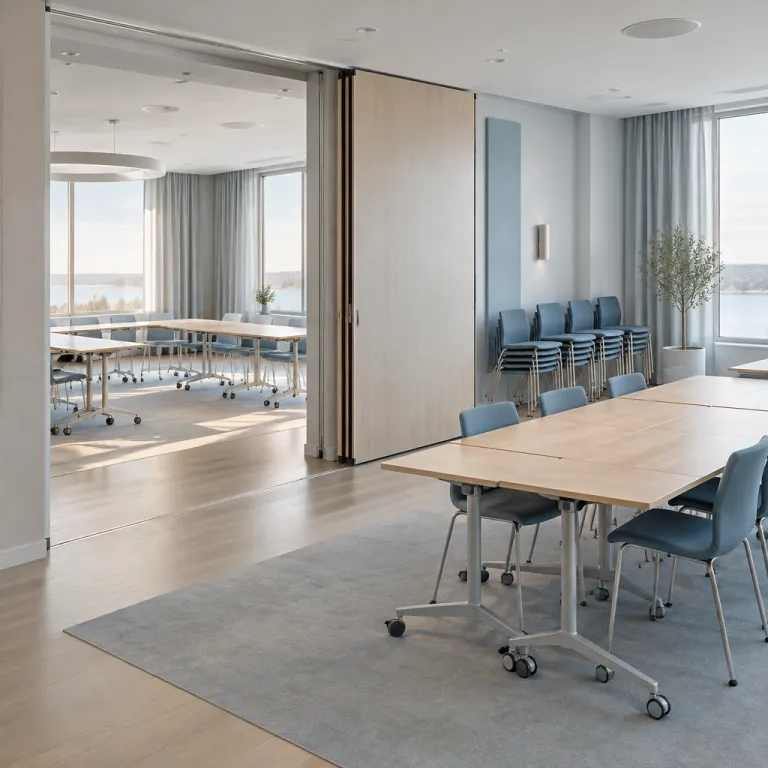
Why sundaymorning fi conference facilities capacity matters for revenue leaders
Revenue leaders evaluating sundaymorning fi conference facilities capacity are not selling simple rooms, they are selling productive time. At Sunday Morning Resort in Pyhäjärvi, the Main Hall, the second floor meeting rooms and the Pääsali conference room together create a compact but powerful event space portfolio that must be priced and allocated with surgical precision. When your maximum capacity peaks around 70 guests, every corporate event, every private meeting and every special event becomes a strategic bet rather than a volume game.
The Main Hall operates as the primary conference hub, with an event space that can host up to 70 people for corporate events or team building sessions during a single day. Pääsali, the more intimate conference room, offers 30 seated or 40 standing guests, while the second floor meeting rooms accommodate 12 participants in quiet, soundproof rooms that are ideal for high value sessions. This tiered structure of conference rooms and meeting spaces means that the overall meeting capacity must be managed as a portfolio of assets, not as isolated rooms.
For revenue managers and hotel general management, the constraint is clear yet full of opportunity. You cannot chase large congresses, because the maximum capacity of the Main Hall caps the size of events, but you can target high margin corporate events that value natural light, high speed connectivity and full service support more than sheer scale. The question is no longer whether the park like Lapland setting is attractive, but how to align pricing, minimum spends and session timing to extract maximum revenue from morning and afternoon blocks across all meeting rooms.
Executive summary for decision makers. In practice, Sunday Morning Resort performs best when it: (1) prioritizes mid sized corporate events and retreats over large congresses, (2) prices morning and afternoon blocks dynamically by room type and day of week, (3) protects comfort based capacity limits in every proposal, and (4) aligns sales, revenue and operations around a single view of available space. When these four principles are applied consistently, limited meeting capacity becomes a competitive advantage rather than a constraint.
Designing a revenue optimization framework for constrained meeting spaces
Building a revenue optimization framework for sundaymorning fi conference facilities capacity starts with acknowledging that time and configuration are as important as the room itself. Each conference room, from the Main Hall to Pääsali and the second floor rooms, should be modeled with separate demand curves for morning and afternoon slots, full day sessions and multi day events. Revenue managers must then connect these curves to realistic corporate event segments that value privacy, natural light and flexible meeting layouts more than a generic conference center experience.
In practice, this means defining granular products such as half day meeting spaces with coffee service, full service residential seminars with dining room usage and private board retreats using the smaller meeting rooms. A structured framework should link each product to a target ADR per guest, a minimum revenue per event space and a clear maximum capacity rule that protects comfort and perceived value. When the available meeting inventory is limited, protecting rate integrity during peak dates is more profitable than chasing extra events at discounted prices.
Advanced frameworks also integrate ancillary revenue levers that go beyond the conference rooms themselves. For example, pricing for special events in the Main Hall can include differentiated fees for high speed connectivity, translation or language services, and tailored team building activities in the surrounding park and nature. To deepen this approach, revenue leaders can study advanced RevPAR levers described in this analysis of RevPAR optimization beyond rate and occupancy, then adapt those concepts to meeting spaces, event space and corporate events packaging.
Aligning commercial strategy, sales teams and RMS for sundaymorning fi
Optimizing sundaymorning fi conference facilities capacity is impossible if the commercial team, revenue management and operations work in silos. The sales team that negotiates corporate events, the revenue manager who sets the price for each conference room and the operations manager who allocates staff to special events must all share the same capacity and profitability rules. Without this alignment, you risk overcommitting meeting rooms, underpricing high demand dates and diluting the perceived quality of the event space.
A robust commercial engine starts with shared definitions of products and constraints. For Sunday Morning Resort, that means codifying that the Main Hall has a maximum capacity of 70 guests, that Pääsali can host 30 seated or 40 standing participants and that second floor meeting rooms are reserved for up to 12 people in more private settings. These definitions should be embedded in the RMS, the CRM and the sales playbooks, so that every planned event proposal respects sundaymorning fi conference facilities capacity and protects guest comfort, natural light exposure and service quality.
To operationalize this, many groups are moving toward integrated commercial revenue engines that connect pricing, sales pipelines and forecasted demand. The approach described in this framework for building a V4 commercial revenue engine in hospitality is particularly relevant for venues with limited meeting spaces. When sales, revenue and operations teams select the same data, share the same questions and frequently asked objections from clients, they can jointly plan event calendars that maximize yield across morning and afternoon blocks, full service packages and special event dates.
Capacity based pricing, segmentation and space configuration
For a venue like Sunday Morning Resort, capacity based pricing is the backbone of any sundaymorning fi conference facilities capacity strategy. The Main Hall, with its 70 person limit, should command premium rates for peak season corporate events, while Pääsali and the second floor rooms can target smaller, higher yield groups that value privacy and quiet. Segmenting demand by group size, language needs, preferred session length and required technology allows revenue managers to match each event to the most profitable space.
One practical approach is to define clear tiers of meeting spaces and conference rooms. Tier one could be full service conferences in the Main Hall, including dining room access, high speed connectivity and tailored team building activities in the surrounding park and nature. Tier two might focus on strategy sessions or board meetings in the 12 person meeting rooms, where natural light, silence and private access are the main selling points. Tier three could use Pääsali as a hybrid conference room and event space for special events, product launches or training sessions with flexible meeting layouts.
Within each tier, pricing should reflect not only the physical room but also the time of day and the day of the week. Morning and afternoon blocks on high demand weekdays can carry higher minimum spends, while shoulder dates can be used to attract new corporate event segments or local special event organizers. By linking each configuration to a clear maximum capacity and a defined revenue target, sundaymorning fi conference facilities capacity becomes a controllable lever rather than a fixed constraint, and the sales team can confidently plan event calendars that protect both guest experience and profitability.
From static meeting inventory to dynamic event revenue management
Many hotels still treat meeting rooms and conference rooms as static inventory, sold with flat day delegate rates that ignore demand patterns. At Sunday Morning Resort, the limited sundaymorning fi conference facilities capacity makes this approach particularly risky, because a single underpriced special event in the Main Hall can block more profitable corporate events. Moving to dynamic event revenue management means treating each room, each time slot and each configuration as a separate product with its own price elasticity.
Dynamic management starts with data, even when volumes are modest. Track how many guests attend each event, which meeting spaces are preferred by which segments, how often clients request natural light or private access and which dates generate the most questions about maximum capacity. Over time, this information reveals which conference rooms should be reserved for high value sessions, which event space combinations work best for team building and which days can support multiple events without compromising service. The goal is to align price, space and time so that every square metre of meeting rooms contributes to overall GOP.
Technology can support this shift, but it must be configured for the specific constraints of sundaymorning fi conference facilities capacity. RMS vendors and software providers should model the Main Hall, Pääsali and the second floor rooms as distinct resources with shared corridors, shared dining room access and shared staffing. When the system understands that the maximum capacity of the Main Hall is 70 and that second floor meeting rooms host 12 people each, it can prevent overbooking of corporate events and special events that would strain the team. Over time, this dynamic approach transforms meeting spaces from a secondary revenue stream into a core pillar of the commercial strategy.
Leveraging setting, service and FAQs to enhance perceived value
Revenue optimization for sundaymorning fi conference facilities capacity is not only about numbers, it is also about perceived value. The Lapland setting near Pyhäjärvi, the natural light in the Main Hall and Pääsali and the quiet second floor rooms all contribute to a premium positioning that justifies higher rates for corporate events. When guests feel that the event space, the meeting rooms and the dining room work together as a coherent experience, they are more willing to pay for full service packages and private special events.
Sales and revenue teams should therefore integrate qualitative elements into their event planning process. Highlight the CO2 controlled ventilation that keeps the conference rooms fresh during long sessions, the high speed connectivity that supports hybrid meetings in multiple languages and the proximity to nature that enables outdoor team building in the surrounding park and forest. Address frequently asked questions transparently, including the limitations of maximum capacity and the fact that “Can Sunday Morning Resort host large conferences?” is answered by “No—maximum capacity around 70 people in Main Hall” and “Is there a small private meeting room?” is answered by “Yes—rooms for 12 people on second floor”.
Finally, align this value narrative with broader chain or group strategies when relevant. For groups managing several venues with different conference center profiles, sundaymorning fi conference facilities capacity can be positioned as the boutique, retreat style option, while larger hotels handle mass events. Strategic guidance on aligning revenue strategy with hotel chain affiliation shows how to place each property within a coherent commercial portfolio. When the commercial team can clearly articulate why clients should select Sunday Morning Resort for specific types of events, the limited maximum capacity becomes a strength rather than a weakness.
Key figures for sundaymorning fi conference facilities capacity
| Space | Configuration | Maximum capacity | Source |
|---|---|---|---|
| Main Hall | Indoor conference style event | Up to 70 people | Experience Pyhä – Sunday Morning Resort venue description |
| Second floor meeting rooms | Boardroom or strategy session | Up to 12 participants per room | Experience Pyhä – meeting room overview |
| Pääsali | Seated meeting / standing reception | 30 seated or 40 standing guests | Venuu – Sunday Morning Resort / Pääsali listing |
- The Main Hall at Sunday Morning Resort can host up to 70 people, which defines the absolute maximum capacity for a single indoor conference style event at the property (source: Experience Pyhä site, venue description for Sunday Morning Resort).
- The second floor meeting rooms are designed for groups of up to 12 participants, making them ideal for board meetings, strategy sessions or private interviews where intimacy and quiet are essential (source: Experience Pyhä site, meeting room overview).
- Pääsali, the main conference room, accommodates 30 guests seated or 40 guests standing, allowing flexible meeting formats from workshops to cocktail style special events (source: Venuu listing for Sunday Morning Resort / Pääsali).
- Because the venue cannot host large congresses, the optimal revenue strategy focuses on mid sized corporate events and retreats, where per guest spend and ancillary services compensate for the limited sundaymorning fi conference facilities capacity.
FAQ about sundaymorning fi conference facilities capacity and revenue strategy
Can Sunday Morning Resort host large scale conferences with several hundred participants ?
No, the venue is not designed for very large congresses, because the Main Hall has a maximum capacity of around 70 guests. Revenue managers should therefore target mid sized corporate events, retreats and special events where intimacy and service quality are valued more than scale. This positioning supports higher average revenue per guest and protects the guest experience.
What types of events are best suited to the different rooms ?
The Main Hall works best for plenary sessions, corporate events and special events up to 70 people, especially when natural light and a sense of space are important. Pääsali is ideal as a conference room for 30 seated or 40 standing guests, suitable for workshops, training or cocktail style events. The second floor meeting rooms are perfect for private board meetings, interviews or small team building sessions with up to 12 participants.
How should revenue managers price morning and afternoon meeting blocks ?
Morning and afternoon blocks should be priced dynamically based on demand patterns, seasonality and segment mix. High demand weekdays can carry higher minimum spends for meeting spaces and conference rooms, while shoulder days can be used to attract new clients with packaged full service offers. The key is to link each time block to a clear revenue target that reflects sundaymorning fi conference facilities capacity constraints.
What are the most frequently asked questions from corporate clients ?
Corporate clients most often ask about maximum capacity per room, availability of high speed connectivity, access to natural light and options for private dining room usage. They also raise frequently asked questions about team building possibilities in the surrounding park and nature, and about language support for international guests. Capturing these questions in a structured way helps revenue managers refine products, pricing and communication.
How can RMS vendors support better use of limited meeting capacity ?
RMS providers can support sundaymorning fi conference facilities capacity optimization by modeling each event space as a distinct resource with shared constraints. Systems should prevent overbooking of conference rooms, enforce maximum capacity rules and allow dynamic pricing by time of day and configuration. When RMS tools integrate sales pipeline data and operational constraints, they help teams plan event calendars that maximize profitability without compromising service quality.
Case study: applying capacity based pricing at Sunday Morning Resort
Consider a two day corporate retreat for 26 participants in early autumn. On day one, the group uses the Main Hall from 09:00 to 17:00 for plenary sessions, followed by a private dinner in the dining room. On day two, they split into two 13 person teams using separate second floor meeting rooms from 09:00 to 15:00, then end with an outdoor team building activity in the surrounding park.
A practical pricing model could define three products: (1) a full day Main Hall package at a target of €95–€120 per person including coffee breaks and basic AV, (2) a half day small meeting room package at €55–€70 per person with light snacks, and (3) an optional outdoor activity fee of €25–€40 per person depending on season and equipment. The table below illustrates how this can translate into a simple pricing matrix for 26 guests.
| Product | Unit price range | Quantity | Indicative revenue range |
|---|---|---|---|
| Main Hall – full day package | €95–€120 per person | 26 guests | €2,470–€3,120 |
| Small meeting rooms – half day package | €55–€70 per person | 26 guests (two rooms of 13) | €1,430–€1,820 |
| Outdoor team building activity | €25–€40 per person | 26 guests | €650–€1,040 |
With 26 guests, this structure can generate a total event value in the €7,000–€9,000 range once dining and additional services are included, while keeping each room within its comfort based capacity. By tracking acceptance rates for similar proposals over time, revenue managers can refine these tiers, adjust minimum spends for peak weekdays and ensure that limited conference capacity consistently delivers strong GOP margins.